
Contents
What's in the report
Click these links to go to a chapter or section.
Executive Summary
Warning: spoilers ahead
Things you should know

B2B is increasingly moving online.
B2B buyers are beginning to behave like regular B2C customers. They spend a lot more time researching potential purchases, and many of them prefer doing it online before talking to anyone. Your website will have to make it easier for your potential clients to carry out self-guided research. This means giving them as much information as they need to go further down the purchase path.
Accessibility will not be enough.
Your issues also include poor findability, a risk of being uncool for both challengers and corporates, a case of conflicting identities and your website's general usefulness. Don't worry, though – this report contains ideas on what to do.
It's not about balancing the corporate and the punk. I's about what punk really means.
If this is going to work, we need to redefine punk. We'll do it by rediscovering its true nature, breaking off from your category's clichés, getting inspired by Vivenne Westwood, and becoming more empathetic without moving to hippieland.
Altruism drives business.
We know you think you're giving away too much value for free. We think you should give away even more, at least online. We present some arguments on why we think so.
We did some research. People appreciate culture.
They just have very practical problems with what to do and how to do it. The right approach isn't to educate clients who aren't ready for culture change, but to target those who are, and educate them on the practical intricacies of your work.
Also, creativity isn't that hot, but ambition is.
And feeling great at and about work. People live to be creative, but they work to achieve things. Speaking to people's creative side doesn't seem viable. But speaking to how they want to feel makes much sense.
Culture is intangible, and that's OK.
We have analysed the way people use language to get at how they think. Turns out that, for your audience, culture is somewhat like a living ecosystem, a formless substance, and a place. Not an operating system that either works or not. In this report we explain why this matters.
Context Trends
What seems to be happening in your space, and how it impacts your business
B2B buyers are beginning to behave like regular B2C customers
45% of buyers are spending more time researching purchases compared to last year. [source]
59% of B2B buyers prefer to do research online instead of interacting with a salesperson. [source]
70.2% of the survey respondents said they prefer to have a clear understanding of their needs before talking to salespeople. [source]
Almost half of the respondents (44.2%) said they also prefer to identify possible solutions before they engage with a salesperson. [source]
C-suite executives, in particular, are most likely to prefer websites (61%) and online peer reviews (60%) over all other forms of research. [source]
52% of buyers said LinkedIn had the biggest impact on their research process. [source]
B2B buyers are increasingly more pragmatic
Interestingly, only about half (47%) of B2B buyers consider case studies & testimonials a very important variable when evaluating a list of potential solution providers. [source]
Instead, they tend to focus on practical considerations, which they have rated as ’very important’ in the following order:
- Deployment time/ease of use (77% respondents);
- Features/functionality/problem-solution fit (72%);
- Price (71%); [source]
During a website visit, 67% of respondents wanted easy access to pricing and competitive information. [source]
Outside of price, content is the #1 factor slowing down deals. It is either too difficult to understand or too difficult to share internally. [source]
When asked which forms of content delivery would help speed up their buying decisions, buyers indicated either ROI calculators/analyses (44%) or a personalized content portal (45%). [source]
Less but better and more relevant content
During a website visit, 76% of respondents expect to see relevant content that speaks directly to their company. 66% wanted content relevant to their particular industry or expertise. [source]
86% of buyers are overwhelmed when provided with more than 10 pieces of sales content. 42% are overwhelmed with more than 5. [source]
64% of respondents expressed a need for easy access to content – without long registration forms. [source]
Rarely a singular buyer
Nearly a quarter (24%) of all B2B buyers reported that more than 5 people were involved in their last B2B purchase.
One-third of buyers (33%) reported that 1-2 people were involved in their last purchase and another third (32%) say that 3-4 people were involved.
Only 8% reported that there was a single decision maker. [source]
Practical takeouts:

- You might have been spending too much time on direct sales to prospects that weren't a good fit in the first place. They probably could have self-qualified better at earlier stages of the sales process.
- The website will have to make it easier for your potential clients to carry out self-guided research. This means giving them as much information as they need to go further down the purchase path. Unfortunately, the current amount of information is not enough.
- Corporate Punk's website will have to be easily shareable among key stakeholders. It will also need to be very easy to read, to avoid cognitive overload on people who are already strained by their roles.
- Creating LinkedIn content is of the utmost importance. But the challenge isn't just getting it out there, but making it relevant. There are two main ways to do this:
– simple but inspiring posts about practical solutions to universal problems (vide Seth Godin's writing – frequent and easily digestible);
– specialising in an industry and writing content that they need.
Reality Checks
What you thought, and what's actually true
Check 1:
What makes for a great website experience
You thought that:
Your main issue is the accessibility of your offer.
But actually:
The issue is (unsurprisingly) more complex.
Our analysis
In our practice, there are 7 factors that make good brands great:
- Value
Does it deliver on its promise? Is it beneficial? - Credibility
Is this trustworthy? Can I believe it? - Usability
Is it easy to use? Is it enjoyable? - Usefulness
How much does it help me achieve the tasks I need to carry out? - Desirability
Is it inspiring? Is it unique? Is it cool? - Accessibility
Does it require abilities/knowledge I might not have? - Findability
How easily can I find it and the information I'm looking for?
How we think your website measures up:
- Value: great
- Credibility: good
- Usability: OK
- Usefulness: average
- Desirability: average
- Accessibility: average
- Findability: poor
Why we think this

Let's start with the bad news:
1. Findability
Findability is the poorest of your scores, but this probably isn't a surprise by now. It's easy to find Corporate Punk when someone knows about it. It's not easy to find it when you're looking for something like it. In terms of internet search, you're in a very competitive, content-heavy space that will need a specialist approach. The website itself also doesn't support findability very well, mainly because of its structure and cryptic navigation.
2. Accessibility
Accessibility is the factor you noticed first, and for good reason. In order to engage with your offer, your visitors will need some knowledge or abilities that people typically don't have. Firstly, they will need to understand your context and category before visiting – otherwise it will be hard for them to identify your value. Secondly, they will need to have enough experience with consultancies to translate your language and offer into concepts they already understand.
3. Desirability
This is a special one that we'll keep coming back to in this report. If there's one thing that this report is really about, it's this exact factor.
Desirability is a consequence of 4 features:
- Uniqueness: being one of its kind,
- Personality: being cool,
- Scarcity: being ’not just for anyone’,
- Principles & ideals: doing things your own way.
It's what differerantiates Porsche and Apple from Skoda and Samsung. We know you get it. We also know that it might come as a shock to you: how is something like Corporate Punk not desirable?
You'll find answers in the next reality check: What Punk Really Means
4. Usefulness
The Context Trends chapter might have already explained this. The website isn't particularly useful because your audience's task isn't to check you out anymore. Now your website is an integral part of their purchasing research, and it should provide them with as much information as they need to feel confident about getting in touch with you.
5. Usability
Fortunately, the problem with the website isn't that you cannot use it at all. It's mostly that you cannot make good use of the information it contains.
6. Credibility
We don't think there are many doubts about Corporate Punk's credibility, apart from those reported in the research conducted by InnovationBubble.
7. Value
If anyone can show just cause why Corporate Punk's value is not great, let them speak now or forever hold their peace.
Practical takeouts:
1. Findability
- A good digital ad/SEO strategy from someone who will ’get you’. We'll focus on this later in the project.
- Using natural language for navigation, labels, links and other interactive elements.
- Handy links to pieces of content related to browsed sections. For example, a link to a blog post entitled ’How our projects work in practice’ next to a specific product/service.
2. Accessibility
- A need-based product/service architecture that's also explained through practical and emotional benefits.
- A 3-layer website architecture: one layer for ’checking things out’, another one for ’learning more’, and another one for deep research.
- Not forgetting about the basics: a clear value proposition statement on the home page and a reminder in the footer.
3. Desirability
- We cover this in the reality check called What Punk Really Means
4. Usefulness
- Responding to our audience's basic informational and emotional needs as specified in our Need Matrix
- Responding to the way B2B buying process works as specified in Our Worksheet
- Providing as much information as people need for research;
- We also covered some takeouts in Context Trends
5. Usability
- Responding as specified in our Need Matrix
6. Credibility
- The track record: clients, case studies, testimonials;
- Showing the whole team with photographs;
- Legal information in the footer;
- The overall visual design;
- The takeouts from What Punk Really Means
7. Value
- ROI calculations, if at all possible (see Context Trends)
- Case studies
Check 2:
What punk really means
You thought that:
The challenge is to strike a balance between the corporate and the punk.
But actually:
The challenge is to find meaningful ways to express the punk, so that the dichotomy doesn't hold true anymore.
Our analysis
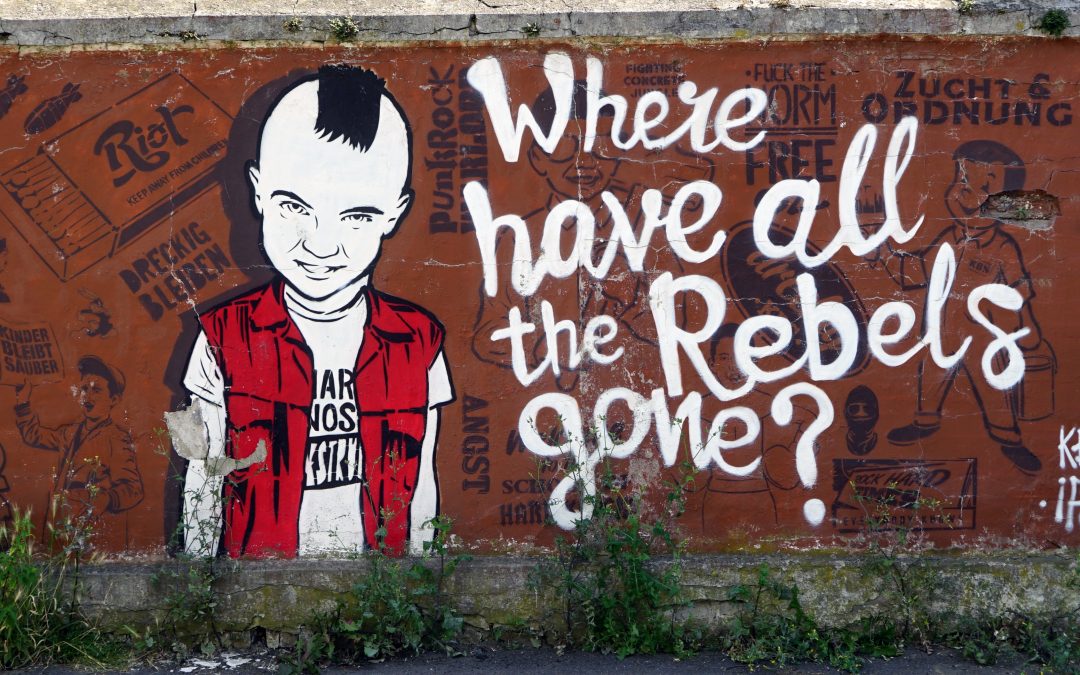
To us, a meaningful rebellion involves doing something differently because it's the right thing to do.
There are many ways through which a brand can express its rebellious attitude. Each of those ways influences its audience on a different level. We can use the famous AIDA model to explain this.
The first level is attention. You can grab it by how you look. Rebellious brands do it by looking different, doing ’stunts’ or employing shock tactics.
The second level is interest. You spark it by what you do. Rebellious brands achieve this by offering something that the world should have. Here's where market disruption lives.
The third level is desire (typically for B2C) or trust (typically for B2B). You inspire it by how you do things and how you behave. Rebellious brands do this by ’walking the walk’ – being an example of how things should be.
The last level is, of course, action. You do it by... calling people to it. But rebellious brands sometimes turn people away from it (Patagonia) or don't call for anything (Benetton).
Our conclusions
Don't hate us: we think that Corporate Punk's rebellious attitude has been expressed in ways that don't help you. It might have been the throttle that kept you from growing. More importantly, it's what caused you to think that the corporate and the punk are two opposing forces. In reality, there are many ways to reconcile them.
If we use the AIDA model, we could say that your brand is well-focused on getting attention and sparking interest, but not focused enough on igniting desire and earning trust.
At this point you might ask: ’How is that possible? We did everything to earn people's trust: all the pitches, all the case studies, a proven track record...’
While this is true, there's also a human factor that cannot be underestimated. Like we said above, brands inspire trust by how they do things. And what they say is typically taken with a grain of salt. Your brand doesn't seem to do things that one can support – it only says things that one can acknowledge.
It's important here that we draw a line between a brand and a company. It's true that your company does many things differently from what the market does. But your brand can only talk about it, and it's not enough. The key question is: what can you do differently that isn't about your core services?
Why we think this
Right now the website presents Corporate Punk as a rebel that plays by the rules of the industry. This brings about cognitive dissonance, and it's a significant hit to your trustworthiness.
Here's what signifies it:
- A rebellious look that's trying to sell a corporate-friendly framework called an Impact Culture Formula™;
- The same look that's promoting WorkForces™, an objective, science-based diagnostic tool;
- A website that talks about great results, but not about the right reasons;
- Copy that's making it seem like the brand is being uptight, but isn't punk all about energy release?
In general, it doesn't seem like Corporate Punk is the new wave – it only looks like it.
In such a situation the clash is unavoidable, and there's no balance you can strike when you don't quite look like the things you do.
It's not that your services are worthless – nothing could be further from the truth. It's just that, by looking punkish and behaving corporate, you've inadvertently made the brand too unapproachable for the challengers and too risky for the corporations.
What we should do

To solve this, we need to redefine what punk means as an element of your brand.
So far it meant non-comformity, looking different, doing work differently, and having a disruptive offer in an industry that's stagnant and self-satisfied. That's entirely good and respectable.
But there are other facets of punk that deserve our attention. Although there is a chaotic and shocking element to it, it was never just about pure destruction. Chaos was only a tool for something more positive. Things like:
- Choosing what really matters over capital gains;
- DIY and creativity;
- Positive social change;
- Empowering the weak;
- Anti-consumerism;
- Humanitarianism.
Getting inspired by those themes would solve the dichotomy between the corporate and the punk. In a way, ’love is the great equaliser’.
We suggest that your brand transcends punk as disobedience and evolves towards punk as positive action.
We should say that we realise that your team already lives and breathes those values. The problem is that they aren't expressed as they should.
How we should do it
First of all, we should realise an important truth: being human in the world of business is the most non-conforming stance possible.
To approach this from the right angle, we need to keep in mind what your clients value. Above all, they want results. They don't care about that wishy-washy stuff, like empathy and humanitarianism. They're in business, after all, and their job is to make money.
What they do care about, though, is being treated with empathy and humanitarianism. And that is an entirely different story – one that gives us plenty of room for action. Keep reading to see how it could look in practice.
Another thing to keep in mind is the personality of your brand. It's a punk, not a hippie, and we shouldn't go too far injecting it with the love potion. We only need some of it. The perfect example would be Vivienne Westwood, who uniquely marries creativity, dissent, and positive action. We also remember that she was your initial inspiration for Corporate Punk's brand identity. We'd like to revisit this direction when working on the new identity. We think it might have been the ’love element’ that we initially missed.
Practical takeouts:

Your category feels risky because it speaks and behaves in ways that feel risky.
We've reviewed a lot of culture consultancy websites, from the smallest to the largest. They all use the same words, they have their own frameworks, they have similar offers. Yes, they’re usually corporate and boring, or hippie and wishy-washy, and they all say they have the right answers.
Who wouldn't be afraid of risk if, upon closer inspection, all options turn out to be just different flavours of the same ice cream? And why wouldn't a risk-averse person just choose vanilla?
To break out from this tie, we need to ask ourselves: what do all culture consulting brands do that has become a cliché? What are the ’sacred cows’ that people grew used to, but would gladly see them refreshed? And how can we change them in a way that's neither judgmental, nor self-defeating, but actually helpful?
Here are some clichés we've found and how we suggest reacting to them:
1. Promising extraordinary performance and results
How about promising results and feeling great at work? How about being self-aware about your context: ’Yes, results are what we work for, and our track record is incredible. Now let's be honest: when did you last feel great at work?’
2. Having proprietary diagnostic tools with overblown names
How about calling your tools something simple or not calling them at all? How about using natural language for things like aligned agendas (teams working well together), creative capabilities (people doing their best work) or leadership behaviour (skillful leaders)? It's just a suggestion – the idea is that, if you use your competitors' jargon, you become the same as them (old news). And corporations might actually bite this – imagine how much of that corporate stuff they've seen before. Speaking like a real human might actually make them feel safer.
3. Having change management practices that ensure ’change that sticks’
How about inverting the paradigm: of course, ’change that sticks’ is important, but it's just a starting point. What's more important is people doing their best work every day, and that's what you aim for.
4. Saying that culture is not fluff, but a tool for better business
How about straight talk: culture is a direct consequence of what people do every day. Some of these things help businesses thrive, and some can be very detrimental. Most of them are accepted as valid, that's why they're so hard to pinpoint. Our work brings them to light, so you can get the results you want.
5. Promising insights you won't find anywhere else
How about promising the benefits that come from those insights? Clarity, confidence, better decisions?
6. Offering training, coaching or support in implementation
How about saying what purpose they serve? Describing why they're crucial in the process?
7. Raving reviews, testimonials and case studies from serious clients
We can't give up on those, but we could make them more useful. How often can you read case studies that are actually engaging and educational?
8. Having a ’circular’ work process that involves ’creating’ or ’defining’ stuff, then ’embedding’ it, and ultimately ’making it stick’
How about describing this in a more human language (again)?
9. Having tools that enable you to measure culture
The industry seems to be fetishising measurement. How about explaining why measure culture and how it's done?
Other expressions of empathy that aren't hippie, and will position you as less risky:
- Using a very simple, human language everywhere
- Having pricing tables and contracts that are easy to understand. Explaining what certain conditions mean (and don't mean). Clarifying in writing that you're not ’preparing yourself for battle’, but actually, you're doing it for the good of the client.
- Getting rid of asterisks and special clauses in sales collateral
- Reserving space for practical considerations in your presentations and pitches; explaining in what practical ways you have your clients' best interest at heart (sort of like we did).
- Removing friction in the process of getting in touch with you (for example, by having a single point of contact and a shared inbox). We know having separate contacts for different enquiries makes you look more serious, but having a single contact with a smiling face will make you look more approachable. And let's face it – we're not fooling anybody.
- Having two kinds of pitch documents: one for quick consumption and sharing (summaries) and one for analyses (everything else)
- Cutting back on tough, over-confident voice/tone (’Why? Because...’) in pitches, and focusing on how your talents will help clients solve their specific problems.
- Cutting back on hard-selling language (proven, guaranteed, revolutionary, great value), and focusing on the actual proofs, guarantees, success stories and benefits.
Check 3:
How much free value is enough
You thought that:
You're giving away too much value for free.
But actually:
You're not giving away enough value (at least online).
Why we think this
The internet is bursting at the seams from all the content about organisational culture.
This wouldn't be a problem if the content was high-quality. Unfortunately, most of it is completely useless. ’How-to’ articles are everywhere, but they only scratch the surface of the issues they're trying to address. Their level is the primary reason people think that culture is fluff.
This also has lasting implications for how people discover new content. They're increasingly relying on curation, reading groups and recommendations. Content you can find on Google is rarely treated as something worth sharing.
In such chaos, if we decide to use the same tactics as everyone else, we'll just drown in a sea of mediocrity.
Unfortunately, your brand is also guilty of putting out irrelevant content. It's mainly focused on what people should believe and what they don't do. This kind of content isn't very helpful, so it isn't shared. As we wrote in Check 2, it's about things one can support, not only things one can acknowledge. And popular support is what makes people share your content.
This also applies to your website – there isn't much free value there, only information you can take into account. Don't get us wrong – your writing is absolutely worthwhile, but is it relevant to what people are going through?
Practical takeouts:

We propose that Corporate Punk becomes the only brand in your space that dares to do the right thing.
And what is the right thing to do?
- Rework your lead generation strategy in a way that expresses punk values: give away a lot of content for free and allow people to independently decide to get in touch with you. This will bring you less leads, but they will be better. And the organic reach is worth it. When did you last see a ’paywalled’ report go viral? And are ’lead magnets’ really ’punk’?
- Write your case studies in a way that not only proves your track record, but also leaves the reader inspired and educated.
- Write about the things that people are afraid to talk about. Break the status quo. Inspire people with stories of hardship, hope and success. Show them what the world really looks like through stories of crying CEOs, for example.
- On LinkedIn, write status updates instead of blog posts. They catch attention better and get more shares. They don't need to be long, but they should really provoke an emotional reaction and teach people something important. For example: you're an MCA finalist. How does it make you feel? What did you have to go through to get there? You have a tough product to sell. Why do you think it's worthwhile to keep at it? Inspire!
- Write for the real problems. Before writing, dedicate time for conscious empathy: what is the most useful thing I can write? What do people struggle with that I can help with by writing?
- Finally, consider writing a few mega-posts. ’The Ultimate Guides’ to improving culture. These are very long-form pieces that require much work, but they get lots of shares and a high position in search results. They're also easy to ’growth-hack’, they have a very long shelf life, and they're a great source of traffic. From an internet marketing standpoint, they bring the most value if you can't write regularly.
Check 4:
What culture isn't
You thought that:
- You can, and should, change people's minds about culture.
- By using the right metaphor, you will make culture feel more tangible, which will make it more accessible.
But actually:
- Most people have a good idea of how important culture is – they just don't know how to work with it in practice.
- It seems that culture will always be an intangible concept for most people, and we won't help them by using metaphors that they don't ’feel’.
Our analysis

We have looked into internet discussions on organisational culture in different places: social media, comment sections, groups, forums and so on. We wanted to understand how they think about culture.
We have also done some cognitive-linguistic analysis to understand how people conceptualise culture. We did it by crunching data from a 14-billion-word natural-language corpus, then analysing the most commonly used expressions.
Finally, we have built our own language corpus from testimonials given to culture consultancies that we found on Google. With the assumption that people will most often mention the things that they most care about, we have analysed word frequencies.
The premise here is that humans speak like they think. By analysing their language, we can understand what concepts they use to explain something abstract. And by listing the most common expressions and checking their other contexts, we can understand what other thing people compare culture to. These things are called conceptual metaphors. For example, when you say to your spouse: ’it's time for us to go our separate ways’, you're figuratively saying that LOVE IS A JOURNEY.
And when you know how people conceptualise something abstract, you also know how to speak to them so they agree with you.
Our conclusions
Surprise 1: People do appreciate culture
It turns out that, generally, people have a good idea of what a good culture does (’it makes people want to come to work, or at least tolerate it’). Still, there is a whole spectrum of experience that people have. Some are very naïve, and some are even cynical. But the overarching theme is that people have very practical problems related to unintended consequences and trade-offs, such as: ’should I promise people a year-end bonus if I'm not sure I'll be able to afford it?’, or ’some of our best performers are arseholes, and I don't want to risk losing them by being tough on them’.
This means that the right approach isn't to educate clients who aren't ready for culture change, but to target those who are, and educate them on the practical intricacies of your work.
Surprise 2: Creativity isn't that hot
Or at least not on a conscious level. The thing that people care about the most is the results. Performance is king. Still, people do find it important to feel great at work, realise ambitions, feel like they can do it, build something big and make an impact.
Non-consciously, they value creativity, self-discovery, having purpose, inspiration, and self-reflection. But to them, it's a ’process thing’, and not a service you can buy. These things are placed in the ’soft’ category, and we doubt that will ever change. It's typical for type-A personalities, and we expect them to be the most frequent type in your audience.
Surprise 3: Culture is intangible, and that's OK
We have found that people use three distinct conceptual metaphors related to culture. Based on that, we have specified three ’cognitive personas’: Gardeners, Craftspeople, and Dwellers.
1. Gardeners
’CULTURE IS A GARDEN’ or ’CULTURE IS A LIVING ECOSYSTEM’
as revealed by collocating words such as:
foster, preserve, cultivate, thrive, root, nurture, ingrain, enrich, flourish, perpetuate, intertwine, incubate, inoculate, assimilate, rich, diverse, vibrant, dominant
It’s worth noting that this metaphor is the most prominent in how people speak. It might also point to how most people treat culture. It’s something emergent that you cannot directly control, but you can influence it. The downside is that people might think that culture doesn’t need attention until it starts deteriorating, like a plant on a window sill. The clients that think this way will need to have a certain love for human ecosystems if they want to succeed. But if they do, they can display incredible finesse and intuition in how they shape their cultures.
There are a lot of connotations here with being organic, familiar, natural, life-giving, sustainable, or motherly. This might point to why there are some negative stereotypes about culture change: weak, wishy-washy, slow, not modern, hippie, too emotional, not really doing anything, etc.
2. Craftspeople
’CULTURE IS A FORMLESS SUBSTANCE’
as revealed by collocating words such as:
shape, embed, permeate, instill, steep (in), immerse (in), influence, pervade, imbue, entrench, piece of, part of
It's the second most popular metaphor, and it's the one most frequently used in business contexts. To these people, culture is a material you can work with. It has practical applications. You can shape it, mould it, embed it and make sure that it ’sticks’. It's still intangible – sometimes it's gaseous, sometimes liquid, and sometimes clay-like. But to them, it doesn't matter what culture is, as long as it does things.
3. Dwellers
’CULTURE IS A PLACE’
as revealed by collocating words such as:
live in, part of, to bridge, to infiltrate, welcoming
It's the least popular metaphor, but still prominent enough to be noticeable. Its role is most often to support the other two metaphors. It's used in contexts where you can directly experience a culture in relation to a place.
By the way:
We should say that these are not literally ’types of people’ – we cannot jump to any conclusions based on just that. But it helps us use the correct words to reach the people that we want to target.
The most important conclusion here is: to your audience, culture is somewhat like an ecosystem that you can shape and occupy. It's not something you can simply materialise – it emerges as a side effect of what you do.
Practical takeouts:
As far as your clients' culture awareness is concerned:
Your team unanimously told us that, in order to engage Corporate Punk, clients must have tried other things that didn't work.
This means:
- A very long client maturation time: before they're ready, prospects might already be happy with what they have
- No way of controlling what happens to ’tumbleweed’ prospects before they've tried everything
- No way of showing up on their radar and proving your value when the stakes aren't high yet
At the same time, we observe that people don't have a problem with appreciating the role of culture, but they do have very practical problems with what to do and how to do it.
How about creating a small, online community for them? Or joining an existing one? A LinkedIn group, for example. A place where people can freely interact with each other, so that you always stay in their orbit. Leaving a few useful comments from time to time might position you as a go-to expert before your prospects mature. It's a lot more scalable than breakfasts and open workshops (though it's not a substitute).
The language of culture
It's important that we say this: in our analysis, we didn't find any culture-related expressions that have anything to do with systems, design, or structure. People just don't associate culture with them.
Therefore, we don't think it's a good idea to call culture ’the operating system of a business’. By calling it this way, we’re simply replacing one abstract concept that people intuitively understand with another one that feels alien, cold and artificial.
We won’t change people’s minds about this, unless we literally change their minds. It's not what they believe, it's how they think. Our attempts will only make them more suspicious, not more interested.
To be the most effective and inclusive, we suggest giving up on trying to make culture concrete, and focusing on its effects/benefits instead – people already recognise them. There is immense freedom in working with culture exactly because it’s so formless. ’What you can do with your culture’ and ’what your culture can do for you’ should be the focus of our messaging.
Also, speaking to people's ’softer side’ doesn't seem like an option that will work. But speaking to how they want to feel makes much sense.
Considerations for content
Importantly, there seems to be unmet demand for content about the practical craft of shaping culture: everyday decisions related to management and leadership that have long-lasting implications. People don't write articles about it, but they do discuss it a lot in forums and groups. How about writing about it? It's definitely a direction worth exploring, especially since we're trying to associate Corporate Punk with action and a hands-on approach.
Q&A
What we should talk about
Our questions

- Your team members seem to have diverse views on whether the psychological aspect of your practice should be emphasised or softened. Can we discuss it now?
- What do you think of creating and promoting a ’culture maturity ladder/model’, like some other industries do?
- Consultancy.uk is a high-ranking catalogue of various high-end consultancies in the UK. Corporate Punk should be there. But the website doesn't seem to recognise ’culture’ as a category. What other business operation/department can we use for this?
- Have you already done any work on your product/service architecture? Can you share it with us? If not, can we help?
- Have you considered ’emergency services’ for businesses in dire straits?
- Have you considered a ’gateway product’ that would serve as a frictionless point of entry into a relationship with Corporate Punk?
- How do you deal with dissatisfied clients, refunds etc.? Can clients withdraw anytime?
- How do you feel about placing some content from your presentations and pitches on Corporate Punk's website?
- How do you feel about revealing some details as to how your projects work, how long they take, or how much they cost?
- Would you consider rebranding/redesigning some of your products, like Workforces?
- How do you feel about writing content that deals with practical advice on everyday implementation?
- Is it possible to accurately calculate ROI in your situation? If not, what would be the ’next best thing’ apart from case studies?
- Have you talked about retargeting, specialising in an industry, or other ways of narrowing your marketing efforts?
- Does your corporate coaching network bring you leads?
- How many people would you like to show on the website, and who will it be?
- If those people have pre-written bios, can you share them with us?
Next steps
What we're going to do
What's in the pipeline

- We will process your answers to our questions and your reactions to our suggestions/ideas.
- If you already have initial ideas for your product/service architecture, we will process them as well. If not, we will ask you to find time for a call during which we can help you work it out.
- By the end of next week (15 March), we will arrive at a website content plan, which is basically a list of what your website should have. We will send it to you to discuss what's feasible in terms of timing, budgeting (how much copy, how many photos), and phasing (all at once or not?).
- After we agree on the content, we will open up a second project ’thread’ that's dedicated to coordinating creative execution: briefing the copywriter, the photographer and so on.
- After that, we will work on the visual direction for Corporate Punk's brand.
- You can find the following steps in The Timeline
Appendix:
Content Ideas
Things you can (and probably should) write about

Must-haves:
- New case studies, around 250 words long. We should have as many of them as possible.
- Why Most (if not all) Business Problems Are Actually Culture Problems
- The modern cultural challenges: zone of chaos, change of context, and the cultural doom loop
- The Cultural Archetypes – which one are you and what to do?
- The Killer B’s
- Why Traditional Market Research Doesn’t Work for Organisational Culture
- How the Impact Culture Formula works (it might be called differently soon, but we need to discuss it)
- Explaining the Creative Capabilities / Aligned agendas Matrix (it might be called differently soon, but we need to discuss it)
- The 3 market mistakes and how Corporate Punk responds to them (Trying to fix the wrong problems, Commissioning disconnected activities, Developing people in the abstract)
- How the Workforces psychological toolkit works (it might be rebranded soon, but we need to discuss it)
- How Corporate Punk’s circular process works (it might be reworked soon, but we need to discuss it)
Should-haves:
- How to deal with pressures from the higher-ups or the Board
- How to get more confidence about one’s role
- How to deal with too much internal pressure to succeed
- Things that great leaders do/don’t do
- Things that great teams do/don’t do
- Attempts at culture change that don’t work
- What stops people from thinking creatively
- What to expect from culture transformation projects
- What NOT to expect from them
- Why you need to put in the work yourself if you want your culture to be successful
- Whom to blame if your culture isn’t up to your expectations (and why blame is not the answer)
- Free fruit, bean bags and other things – why they don’t work, and why people think they would
- Stories of cultural crises in well-known companies
- How to convince your boss/colleagues/the board to invest in programmes that improve culture
- ’Dear CMO…’, ’Dear COO…’ etc. – what they should know about culture, transformation programmes, and the role they play in them
- 10 things you can do RIGHT NOW to make your culture better tomorrow
- How Corporate Punk’s projects work in practice – activities, tasks, requirements, expectations. The day-to-day perspective
- Once you’ve identified a culture problem, how to identify solutions (and when to talk to a consultant instead)
- What culture change you can achieve by yourself, and when you’ll need external help
- Stories of unintended consequences in culture transformation projects
- The innocent, small stuff that actually hurts your culture
- The Ultimate Guide to Creating a Great Company Culture – megapost
- Measuring the ROI of culture, and what’s actually feasible
- What to look out for when shortlisting possible culture consultancies
- Project scoping in culture transformation projects – how Corporate Punk’s way of doing it is the best
- How to specify your criteria so that potential providers can actually effect change
- How to know „what good looks like” in culture transformation projects
- Why Corporate Punk responds to briefs the way it does
- So you’ve invested in a project with us – here’s what to expect
- Smaller chunks taken out of ’Creativity is Power’